
Hip pain can be incredibly frustrating — especially when you’ve tried stretching, resting, and even changing how you walk, yet nothing seems to bring lasting relief. If that sounds familiar, there’s a good chance the real source of your discomfort isn’t actually your hip at all. Here in Hickory, NC, many patients come into Wellness One describing what they believe is classic hip pain, only to discover that their lower back is the true culprit. Understanding this connection can be the difference between months of chasing the wrong problem and finally finding the root cause of your pain.
What does it mean when hip pain comes from the lower back?
The lower back and hip share a complex network of nerves, muscles, and joints that are deeply interconnected. When something goes wrong in the lumbar spine — whether it’s a misalignment, a compressed nerve, or tight surrounding muscles — the pain can radiate down into the hip, the groin, and even the leg. This is known as referred pain, and it’s far more common than most people realize.
The Anatomy Connection: Why Your Back and Hip Are So Linked
To understand why back problems so often disguise themselves as hip pain, it helps to take a quick look at how these two regions are built. Your lumbar spine — the lower five vertebrae of your back — sits directly above your pelvis. The pelvis, in turn, connects to your femur (thigh bone) through the hip joint. These structures don’t operate independently; they function as part of one continuous kinetic chain.
Running through this entire region is the sciatic nerve, the longest nerve in the human body. It originates from nerve roots in the lower lumbar spine and sacrum, travels through the gluteal (buttock) region, and extends all the way down each leg. When any of the vertebrae or discs in the lower back compress or irritate one of these nerve roots, the result can be pain, tingling, or numbness that shows up in the hip, the buttock, or the thigh — even though the actual problem is occurring higher up in the spine.
Beyond the sciatic nerve, the muscles of the lower back and hip are deeply intertwined. The psoas muscle, for example, connects the lumbar spine directly to the top of the femur. When it becomes tight or strained, it can create pain that feels exactly like it belongs to the hip. The same goes for the piriformis muscle, which lies deep in the gluteal region and is closely associated with sciatic nerve irritation. All of this anatomical overlap makes it genuinely difficult — even for healthcare providers — to immediately identify whether a patient’s hip pain originates locally or comes referred from the spine.
Common Causes of Lower Back-Driven Hip Pain
Several common spinal conditions are known to produce pain that’s felt in the hip region rather than — or in addition to — the back itself. At Wellness One, Dr. Charlie Gray sees this pattern frequently in patients across the Hickory, NC community, and recognizing these underlying causes is the first step toward effective care.
Lumbar disc issues. The discs between your lumbar vertebrae act as cushions and shock absorbers. When one of these discs becomes compressed, bulged, or herniated, it can press against a nearby nerve root. Depending on which nerve is affected, the resulting pain may travel into the hip, groin, or outer thigh — areas that feel completely separate from the spine but are neurologically connected to it.
Sacroiliac joint dysfunction. The sacroiliac (SI) joints connect your sacrum — the triangular bone at the base of your spine — to your pelvis. These joints endure enormous stress with everyday movement, and when they become inflamed or misaligned, the pain is often felt directly in the hip area or the low back on one side. Many people assume this is a hip problem, when it’s actually a pelvic/spinal joint issue.
Lumbar facet joint irritation. The small joints at the back of each vertebra (called facet joints) can become irritated due to wear, poor posture, or repetitive stress. Facet joint problems in the lower lumbar levels often refer pain into the buttock and hip region.
Piriformis syndrome. Though this technically involves a muscle rather than the spine, the piriformis sits in close proximity to the sciatic nerve. When tight or inflamed, it can mimic sciatica and produce pain that travels through the hip and down the leg.
How to Tell the Difference Between Hip and Back Pain
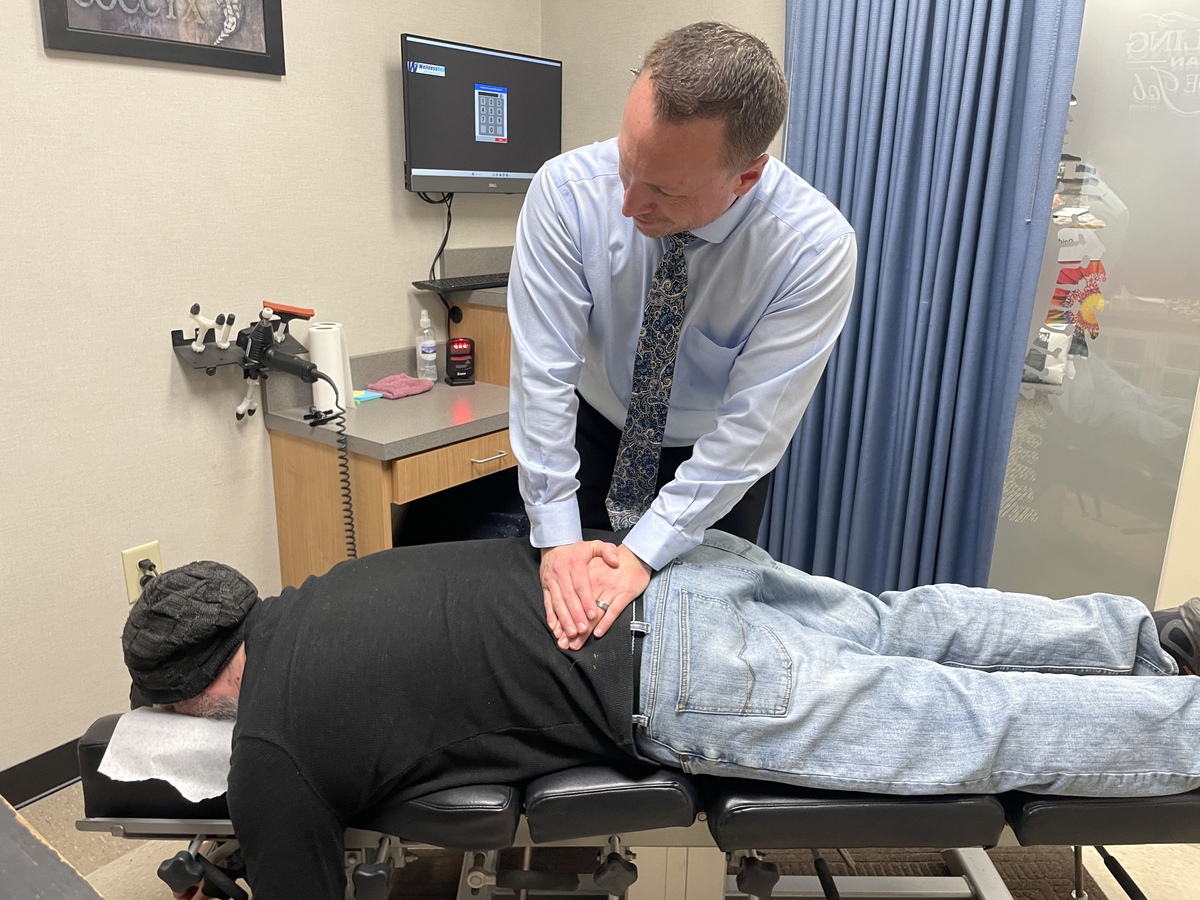
One of the most important steps in finding lasting relief is figuring out whether your pain is truly originating in the hip joint itself or being referred from the lumbar spine. There are some patterns that can help point you in the right direction, though a proper evaluation from a qualified professional like Dr. Charlie Gray at Wellness One is always the most reliable way to get clarity.
Pain that originates in the hip joint itself tends to be felt in the groin area, directly in front of the hip, or deep inside the joint. It often worsens when you rotate your leg inward or outward, when you climb stairs, or when you bear weight on that leg. True hip joint pain is generally aggravated by hip-specific movements.
Pain that comes from the lower back, on the other hand, tends to feel more diffuse. It may radiate into the outer hip, the buttock, or down the leg. It often changes with spinal positions — sitting for long periods, bending forward, or arching the lower back may make it better or worse. Numbness, tingling, or a burning quality to the pain are also signs that a nerve in the spine may be involved.
The tricky part is that many people experience both simultaneously. Years of compensating for a back problem can create genuine hip muscle tightness, and vice versa. This is exactly why a thorough examination — one that evaluates both regions and how they interact — is so important before jumping into any treatment plan.
|
Characteristic |
True Hip Joint Pain |
Lower Back-Referred Hip Pain |
|---|---|---|
|
Primary location |
Groin, front of hip, inside the joint |
Outer hip, buttock, radiating down thigh |
|
Aggravating movements |
Rotating the leg, climbing stairs, bearing weight |
Prolonged sitting, bending, arching the back |
|
Associated symptoms |
Joint stiffness, reduced range of motion at hip |
Tingling, numbness, burning sensation |
|
Pain pattern |
Localized, consistent with movement |
Diffuse, may travel down the leg |
|
Responds to |
Hip-specific stretching and joint care |
Spinal treatment, nerve mobilization |
How Spinal Decompression May Help with Nerve Compression
For some patients, spinal decompression may also be incorporated into a chiropractic care plan, particularly when a compressed or irritated nerve in the lower back is contributing to hip, buttock, or leg symptoms. Spinal decompression uses gentle, controlled traction designed to reduce pressure on the discs and surrounding spinal structures. When appropriate, combining decompression with chiropractic care may help relieve pressure on irritated nerves, improve spinal mobility, and support a more comfortable recovery.
Because not every type of hip or lower back pain is related to nerve or disc compression, Dr. Charlie Gray will first evaluate the underlying cause of your symptoms to determine whether spinal decompression is an appropriate option for you.
How Chiropractic Care Fits Into Your Recovery
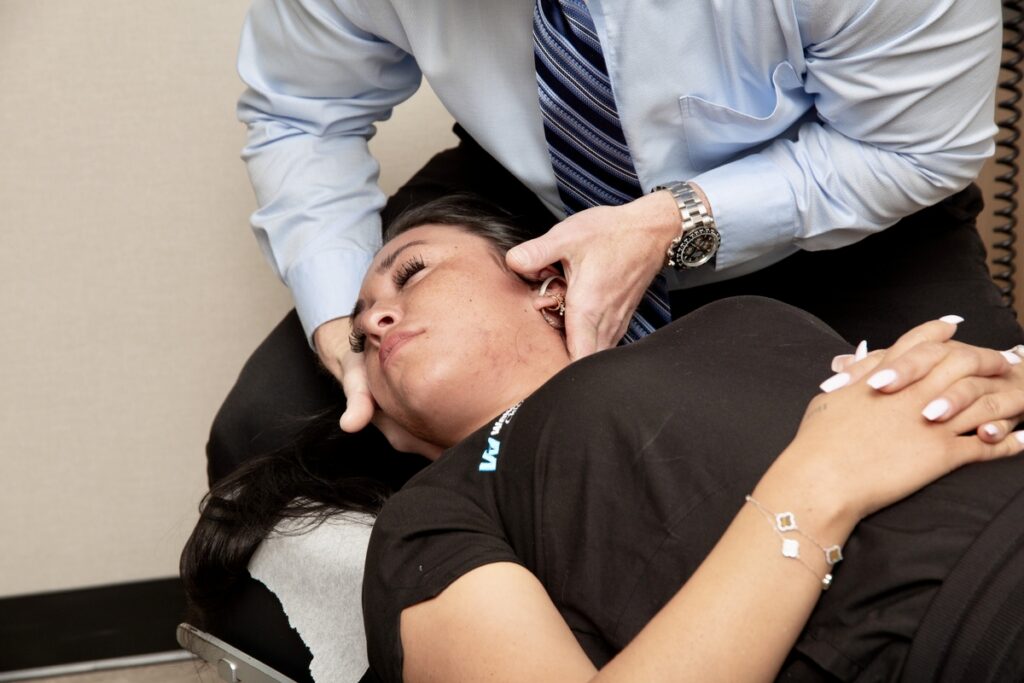
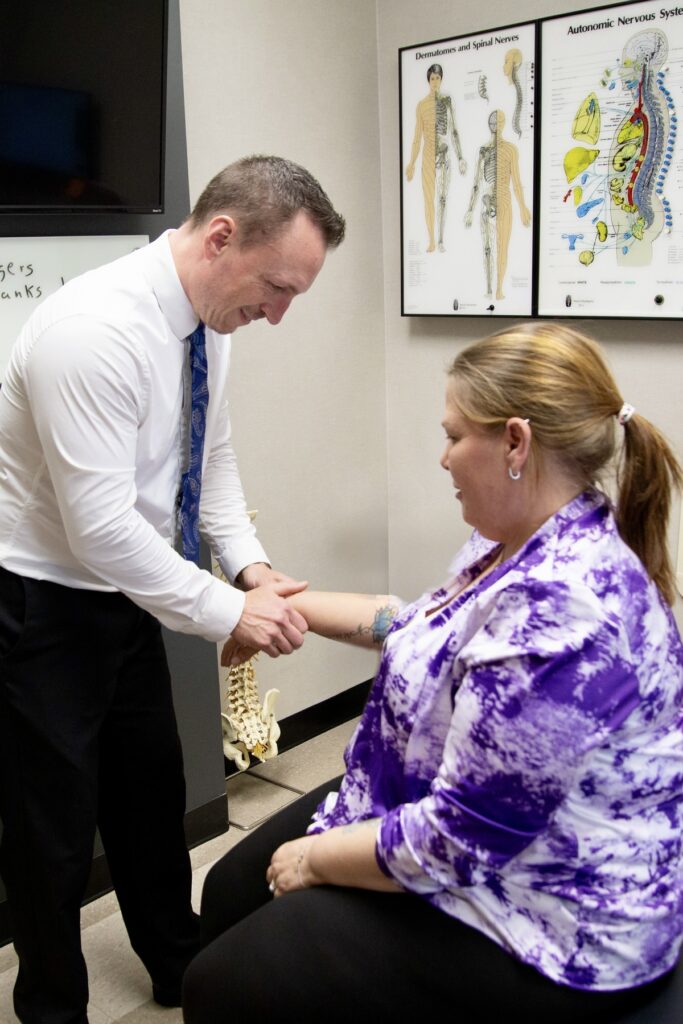
Chiropractic care is particularly well-suited for the overlap between hip and lower back pain because it takes a whole-body, structural approach rather than treating just the spot where pain is felt. At Wellness One in Hickory, NC, Dr. Charlie Gray begins with a comprehensive evaluation that looks at your spine, pelvis, and hip mechanics together — because treating one without understanding the other often leads to incomplete results.
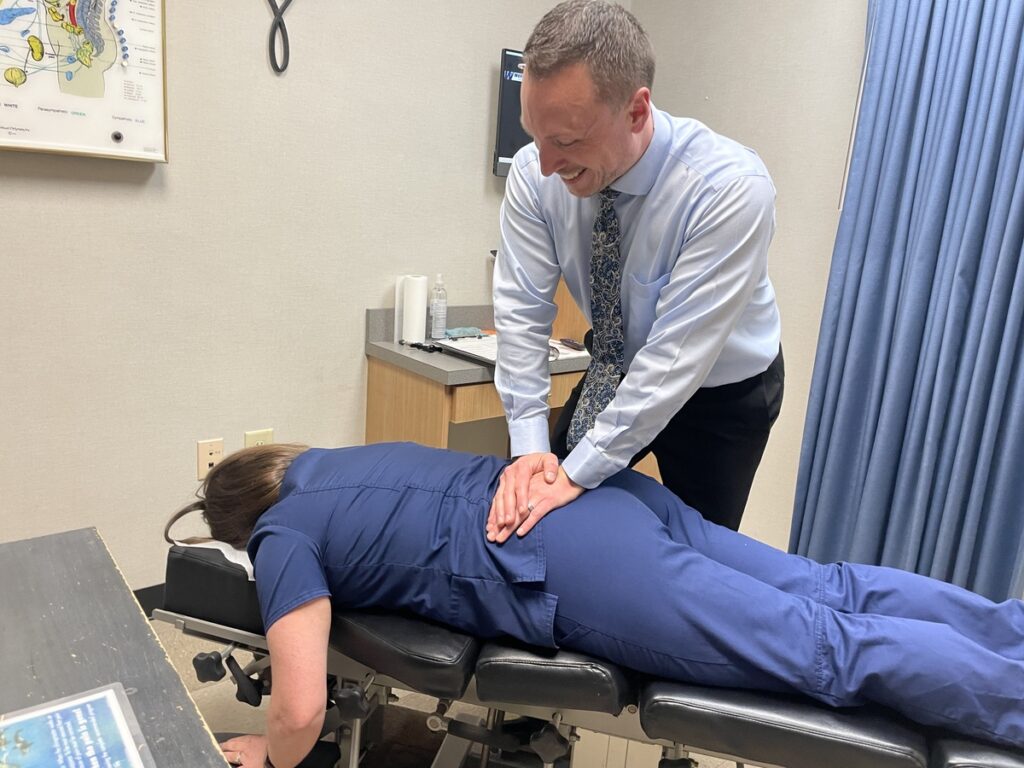
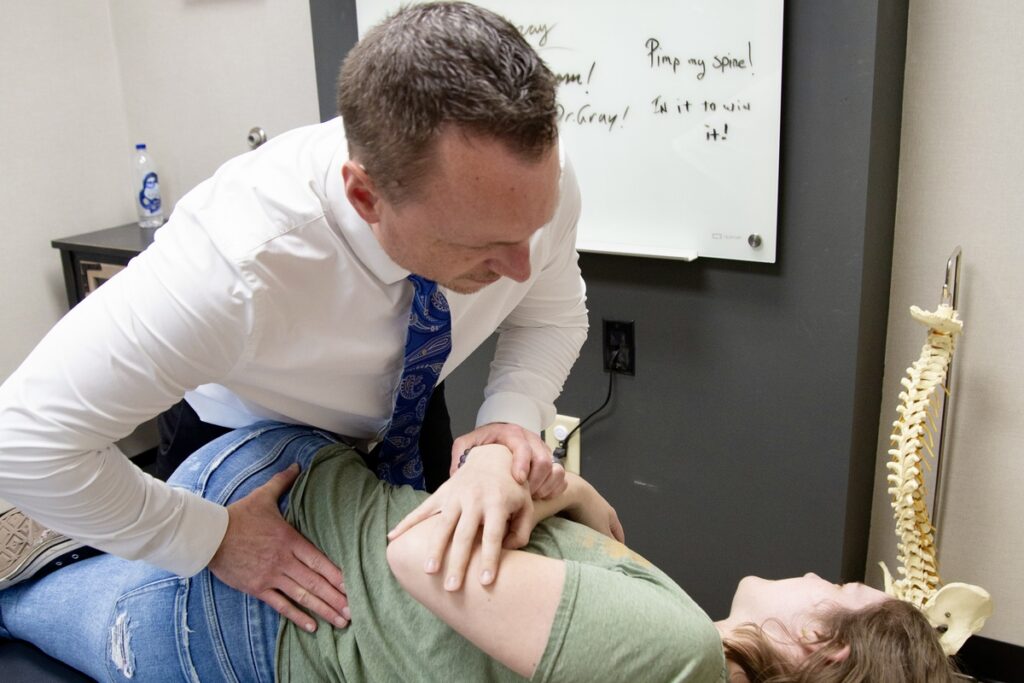
Spinal adjustments — the hallmark of chiropractic care — aim to restore proper alignment and movement to the vertebrae and joints of the lumbar spine and pelvis. When the joints of the lower back are functioning well, there’s less mechanical stress on the surrounding nerves and soft tissues, which can directly reduce the referred pain patterns that show up in the hip. Evidence from organizations like the American College of Physicians and the National Center for Complementary and Integrative Health suggests that spinal manipulation is a reasonable, evidence-informed option for managing lower back pain and related conditions.
Beyond adjustments, chiropractic care at Wellness One may also include soft tissue therapy to address tight muscles like the psoas, piriformis, and hip flexors. Corrective exercises and posture education are often integrated into care plans to help patients understand how their daily habits — how they sit, stand, and move — contribute to the problem. The goal isn’t just pain relief. It’s helping your body move the way it was designed to, so that relief lasts.
Practical Tips to Support Your Lower Back and Hips
While professional care is important, there’s plenty you can do day-to-day to support the health of your lower back and reduce the likelihood of pain patterns developing. These tips are grounded in basic biomechanics and are safe for most people to implement, though it’s always a good idea to check with your care provider before starting anything new.
Mind your sitting posture. Prolonged sitting is one of the most common contributors to both lower back stress and hip flexor tightness. If you work at a desk, try to keep your hips at roughly a 90-degree angle with your feet flat on the floor. Take short movement breaks every 30 to 45 minutes to reduce cumulative spinal load.
Strengthen your core — gently. The muscles of your abdomen and deep back act as a natural support system for your lumbar spine. Gentle core engagement exercises, such as diaphragmatic breathing or pelvic tilts, can help reduce the strain placed on your spinal joints and discs over time. Avoid aggressive sit-ups or crunches if you’re currently in pain.
Stay aware of how you sleep. Sleeping on your stomach can put significant rotational stress on the lumbar spine. Sleeping on your side with a pillow between your knees, or on your back with a pillow under your knees, tends to be more supportive for the lower back and hips.
Move every day. Even low-impact activity like walking helps maintain circulation to spinal discs, reduces stiffness, and keeps the muscles around the hip and back from tightening up. You don’t need an intense workout — consistent, gentle movement goes a long way.
When to See a Chiropractor
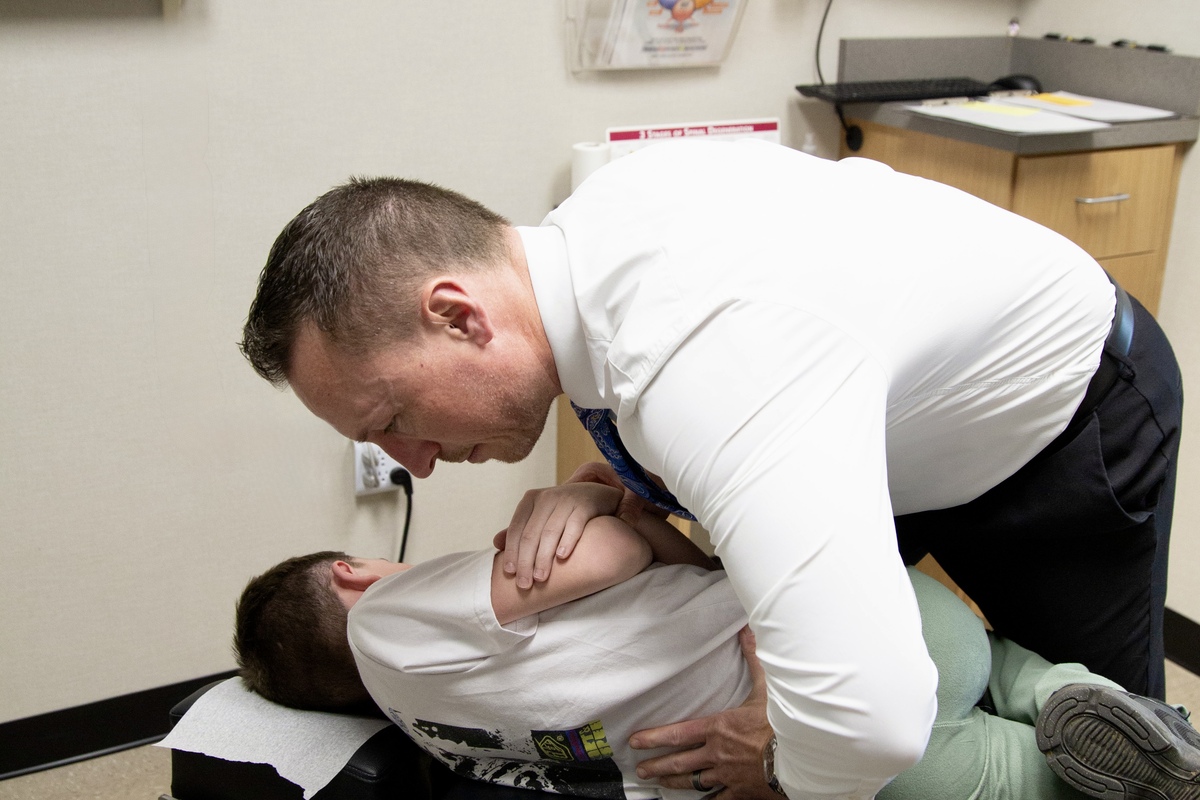
Many people wait longer than they should before seeking care, hoping the pain will resolve on its own. Sometimes it does — but often, unaddressed mechanical problems in the spine and pelvis continue to worsen over time. A good general guideline is this: if hip or back pain has persisted for more than a couple of weeks, is affecting your daily activities, or keeps coming back after short periods of relief, it’s worth getting a professional evaluation.
Dr. Charlie Gray and the team at Wellness One in Hickory, NC are experienced in evaluating exactly these kinds of overlapping pain patterns. An evaluation can help determine whether your pain is coming from the hip joint, the lumbar spine, the SI joint, or some combination — and from there, a clear, individualized approach can be discussed.
There are some symptoms, however, that warrant prompt medical attention rather than a chiropractic visit first. If your pain is accompanied by loss of bladder or bowel control, significant leg weakness, fever, or unexplained weight loss, please seek medical care right away. These can be signs of a more serious underlying condition that needs immediate evaluation.
Myths vs. Facts About Hip and Back Pain
Myth: If the pain is in my hip, the problem must be in my hip.
Fact: Referred pain is extremely common in the musculoskeletal system. The lumbar spine, sacroiliac joints, and surrounding muscles can all generate pain that is felt in the hip region without any structural problem in the hip joint itself. This is why accurate diagnosis matters so much before beginning treatment.
Myth: Chiropractic adjustments are only for back pain.
Fact: Chiropractors are trained to assess and care for the entire musculoskeletal system, including the pelvis, hips, and extremities. Because hip and back pain are so frequently connected, a chiropractic evaluation routinely addresses both areas together as part of a comprehensive assessment.
Myth: Resting completely is the best way to heal back-related hip pain.
Fact: Research generally supports staying gently active as a more effective recovery strategy than bed rest for most forms of lower back and referred pain. Complete inactivity can actually increase stiffness and slow healing. Guided movement, appropriate stretching, and low-impact activity are typically part of a sound recovery approach.
Myth: If I’ve had this pain for years, nothing can help.
Fact: Chronic pain does not automatically mean permanent pain. Many patients with long-standing hip and lower back complaints experience meaningful improvement with consistent, appropriate conservative care. The key is identifying the actual source of the problem rather than simply managing symptoms.
Myth: Imaging like an X-ray or MRI will always reveal the cause of my pain.
Fact: Imaging is useful in certain situations, but it doesn’t always tell the full story. Many people have structural findings on imaging with no pain, and many others have significant pain with minimal imaging findings. A thorough physical and functional examination is often more informative for understanding the source of hip and back pain.
Final Thoughts From Wellness One in Hickory, NC
If you’ve been living with hip pain that just doesn’t seem to respond to what you’ve tried, it may be time to look at the bigger picture. The connection between the lower back and the hip is real, it’s well-established in musculoskeletal anatomy, and it’s one of the most frequently overlooked reasons why people stay stuck in pain cycles for far longer than necessary.
Here at Wellness One in Hickory, NC, Dr. Charlie Gray is committed to helping patients in our community get to the actual root of their pain — not just mask it. Every evaluation is thorough, every care plan is individualized, and the goal is always to help you move better, feel better, and live more fully without relying on medications or invasive procedures.
You deserve to understand what’s happening in your own body. If you’re unsure whether your hip pain might be coming from your lower back, the first step is simply having a conversation and getting a proper look. The answer might be closer — and more treatable — than you think.
Frequently Asked Questions
Can a pinched nerve in my lower back cause hip pain?
Yes, absolutely. The nerve roots that exit the lower lumbar spine travel through the hip and gluteal region on their way down the leg. When one of these roots is compressed or irritated — by a disc, bone spur, or inflamed joint — it can produce pain, tingling, or numbness that is felt in the hip, buttock, or thigh even though the origin is in the spine.
How does a chiropractor determine whether my hip pain is coming from my back?
A chiropractor will typically perform a thorough orthopedic and neurological examination that includes testing the range of motion of both the hip joint and the lumbar spine, assessing muscle strength, checking reflexes, and evaluating how specific movements reproduce or relieve your symptoms. This helps distinguish between true hip joint problems and pain referred from the spine.
Is it safe to get a chiropractic adjustment if I have hip pain?
For most people with musculoskeletal hip and back pain, chiropractic care is considered a safe, conservative option. Dr. Charlie Gray will evaluate your specific situation before recommending any adjustments or therapies to ensure they are appropriate for you. If there are any contraindications, you will be referred appropriately.
How long does it take for referred hip pain from the back to improve?
Recovery timelines vary depending on the underlying cause, how long the problem has been present, and how well a person responds to care. Some patients notice improvement within a few visits, while others with chronic or more complex presentations may require a longer course of care. Consistency and following your care plan recommendations make a significant difference.
Can poor posture really cause hip pain?
Yes — poor posture, particularly prolonged forward-head posture and excessive lumbar flattening or rounding while seated, places abnormal stress on the lumbar spine and pelvis. Over time, this mechanical imbalance can contribute to muscle tightness, joint irritation, and referred pain that shows up in the hip and gluteal region.
Should I see a chiropractor or an orthopedic doctor first for hip pain?
For most people without red flag symptoms, starting with a conservative, non-invasive evaluation from a chiropractor is a reasonable first step. If the evaluation reveals that your condition requires imaging, specialist care, or surgical consultation, a good chiropractor will refer you accordingly. The goal is always to get you the right care, wherever that comes from.
TL;DR
-
Hip pain frequently originates in the lower back due to shared nerves, muscles, and joints — this is called referred pain.
-
Common spinal causes include lumbar disc issues, sacroiliac joint dysfunction, facet joint irritation, and piriformis syndrome.
-
True hip joint pain tends to be felt in the groin and front of the hip; back-referred pain tends to radiate to the outer hip, buttock, or thigh.
-
Chiropractic care addresses both the spine and the hip as an interconnected system, making it well-suited for these overlapping pain patterns.
-
If your hip pain has persisted more than a couple of weeks or keeps returning, a professional evaluation at Wellness One in Hickory, NC with Dr. Charlie Gray is a sensible next step.