
If you’ve ever felt a sharp, shooting pain that seems to radiate down your arm or leg — or a strange numbness that comes out of nowhere — you may have wondered if something is seriously wrong. That sensation is often the result of a pinched nerve, and it’s one of the most common reasons people seek chiropractic care. Here at Wellness One in Hickory, NC, Dr. Charlie Gray sees patients dealing with this kind of discomfort on a regular basis. The good news is that understanding what’s happening in your body can go a long way toward reducing anxiety and helping you find the right path to relief.
What is a pinched nerve? A pinched nerve — medically referred to as nerve compression — occurs when surrounding tissues such as bones, cartilage, muscles, or tendons apply too much pressure to a nerve. This pressure disrupts the nerve’s ability to function normally, leading to pain, tingling, numbness, or weakness.
What Causes a Pinched Nerve?
Pinched nerves don’t happen randomly — there’s almost always a structural reason behind them. The nerve itself isn’t damaged in the traditional sense; rather, something in its surrounding environment is pressing on it in a way it shouldn’t be. Understanding the root causes can help you make sense of your symptoms and why certain activities or postures might make things worse.
One of the most common causes is a herniated or bulging disc. The discs in your spine act as shock absorbers between each vertebra. When a disc shifts out of position or its inner gel-like material pushes outward, it can press directly against a nearby nerve root. This is especially common in the lower back and the neck, and it often produces pain that travels far from the original source — down the leg in the case of sciatica, or down the arm when the cervical spine is affected.
Bone spurs are another frequent culprit. As we age or as wear and tear accumulates on our joints, the body sometimes grows extra bits of bone in an attempt to stabilize the area. These bony growths can narrow the spaces where nerves pass through, creating compression. Osteoarthritis is closely linked to this process and becomes more relevant as patients get older.
Poor posture is a contributing factor that Dr. Charlie Gray often sees in patients at Wellness One. Spending long hours hunched over a desk, looking down at a phone, or carrying tension in your shoulders can slowly alter the alignment of your spine and increase pressure on surrounding nerves. Repetitive motions — like those required in certain jobs or sports — can also gradually irritate a nerve over time.
Injuries from car accidents, falls, or sudden impacts can acutely compress or stretch a nerve, while conditions like spinal stenosis (narrowing of the spinal canal) can create a chronic compression environment. Even inflammation from muscle tension or swelling in nearby soft tissues can be enough to create that painful pressure.
Common Symptoms to Watch For
A pinched nerve can feel different depending on where it’s located in the body and which nerve is involved. That’s part of what makes this condition so confusing for many people — the pain doesn’t always appear at the site of the problem. Your body experiences symptoms wherever that nerve travels, which can be quite far from the actual compression.
The most common sensations associated with nerve compression include sharp or burning pain, a radiating ache that moves down a limb, numbness or a “pins and needles” feeling, and muscle weakness in the affected area. Some patients describe the feeling as an electric shock that shoots through the arm or leg when they move a certain way.
In the neck and upper back, a pinched nerve often causes pain that travels into the shoulders, arms, or hands. In the lower back, compression of the sciatic nerve — which is the longest nerve in the body — produces what’s known as sciatica: a deep, aching or shooting pain that runs from the low back through the buttock and down into the leg, sometimes all the way to the foot.
It’s worth noting that symptoms can vary greatly in intensity. Some people experience only mild, intermittent discomfort, while others find that the pain significantly limits their daily activities. Either way, persistent symptoms deserve a proper evaluation.
How the Spine Is Involved
Your spine is far more than just a structural column — it’s the primary protective housing for your spinal cord and the branching nerve roots that serve every part of your body. The relationship between spinal alignment and nerve health is central to the chiropractic philosophy and to understanding why so many pinched nerve issues originate in or around the spine.
Between each vertebra in your spine, there are small openings called intervertebral foramina. These are the passageways through which spinal nerve roots exit the spinal canal and travel to their destination in the body. When the spine is properly aligned and the discs are healthy, these openings are spacious enough to allow free movement of the nerves. When alignment is disrupted — whether by a herniated disc, a subluxation, muscle guarding, or degenerative changes — these openings can narrow, and that’s when compression begins.
Chiropractors like Dr. Charlie Gray are specifically trained to identify these areas of misalignment and dysfunction. At Wellness One in Hickory, NC, the evaluation process looks closely at the spine’s structure and movement to understand not just where the pain is, but why it’s happening in the first place.
It’s also important to understand that the nervous system controls virtually every function in your body. When a nerve is under sustained pressure, the effects can go beyond localized pain. You might experience changes in strength, reflexes, or even organ function depending on where in the spine the issue originates. This is why addressing spinal health proactively matters so much.
How Chiropractic Care Can Help
Chiropractic care offers a non-surgical, drug-free approach to addressing the underlying causes of nerve compression. Rather than masking the symptoms with medication, the goal is to restore proper alignment and movement to the spine so that the nerve is no longer under undue pressure. Research suggests that spinal manipulation and manual therapy can be effective in reducing pain and improving function in patients with nerve-related conditions, including those with disc-related issues and sciatica.
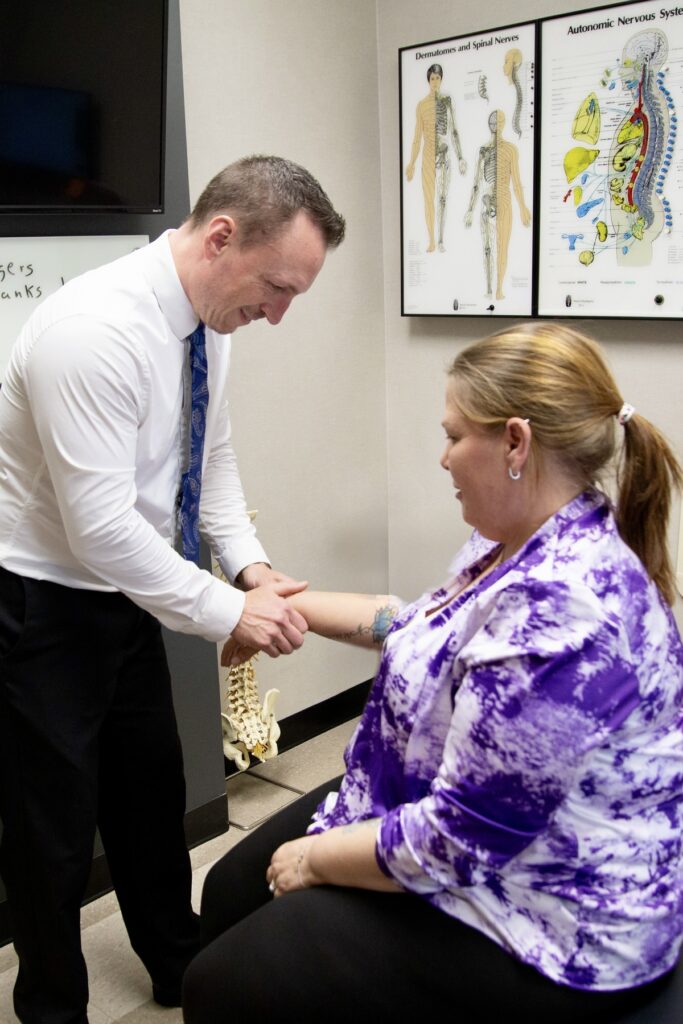
When a patient comes into Wellness One with symptoms of a pinched nerve, Dr. Charlie Gray begins with a thorough assessment. This typically includes a health history review, a postural analysis, orthopedic testing, and sometimes referral for imaging if needed. The goal is to build a clear picture of what’s happening in your spine before any care begins.
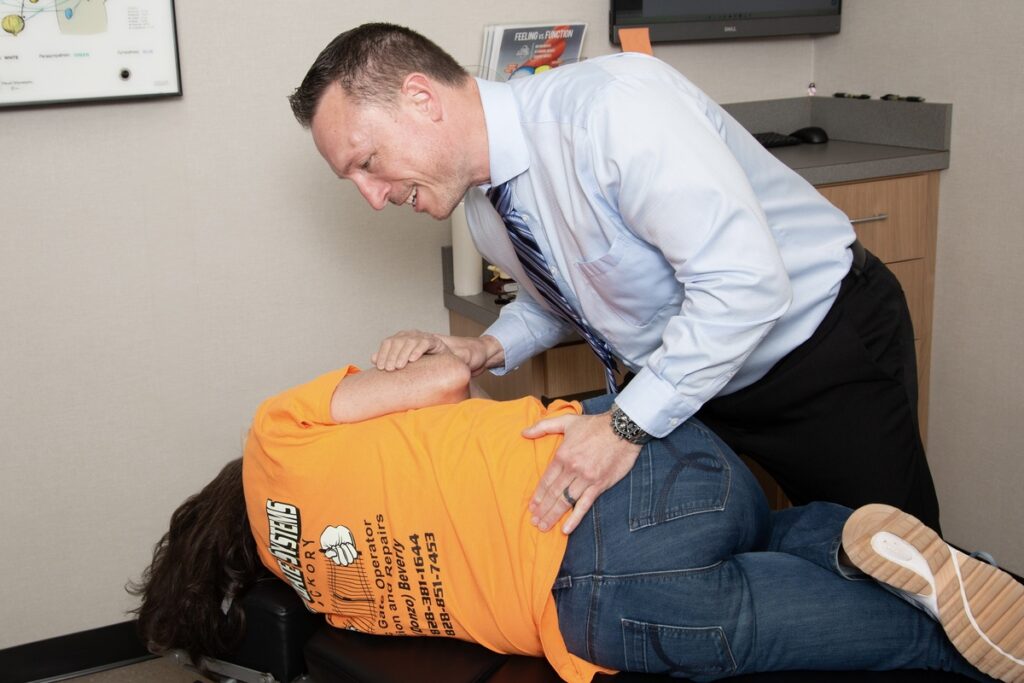
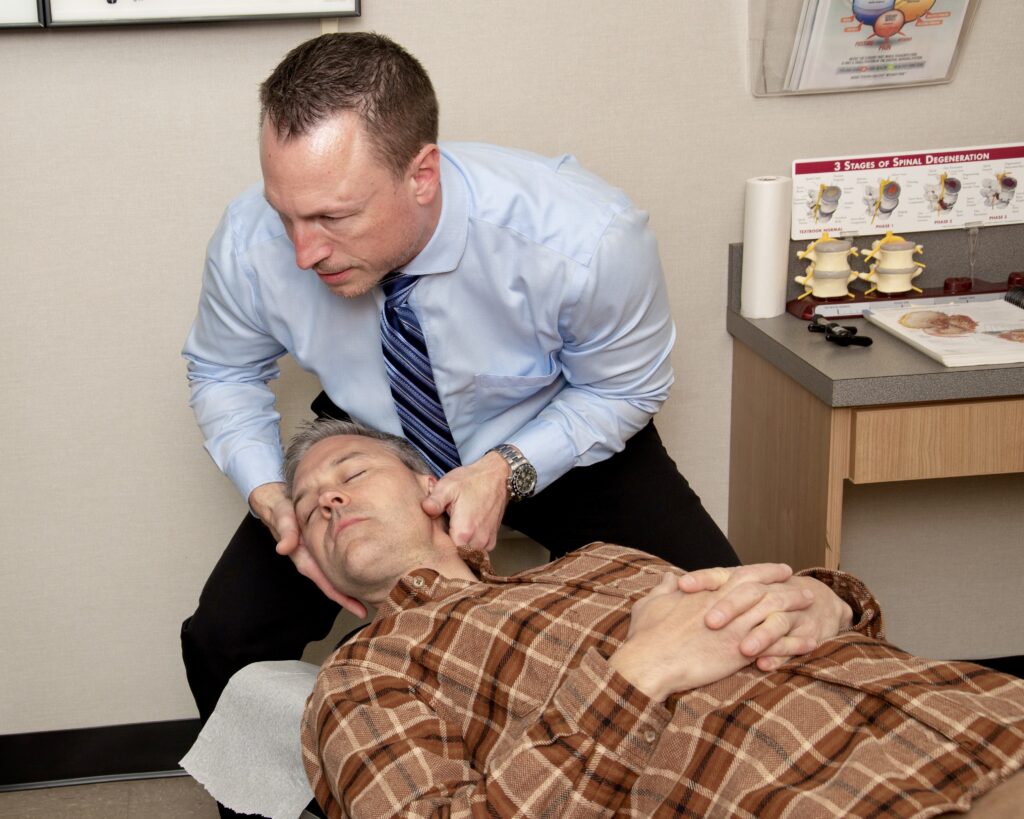
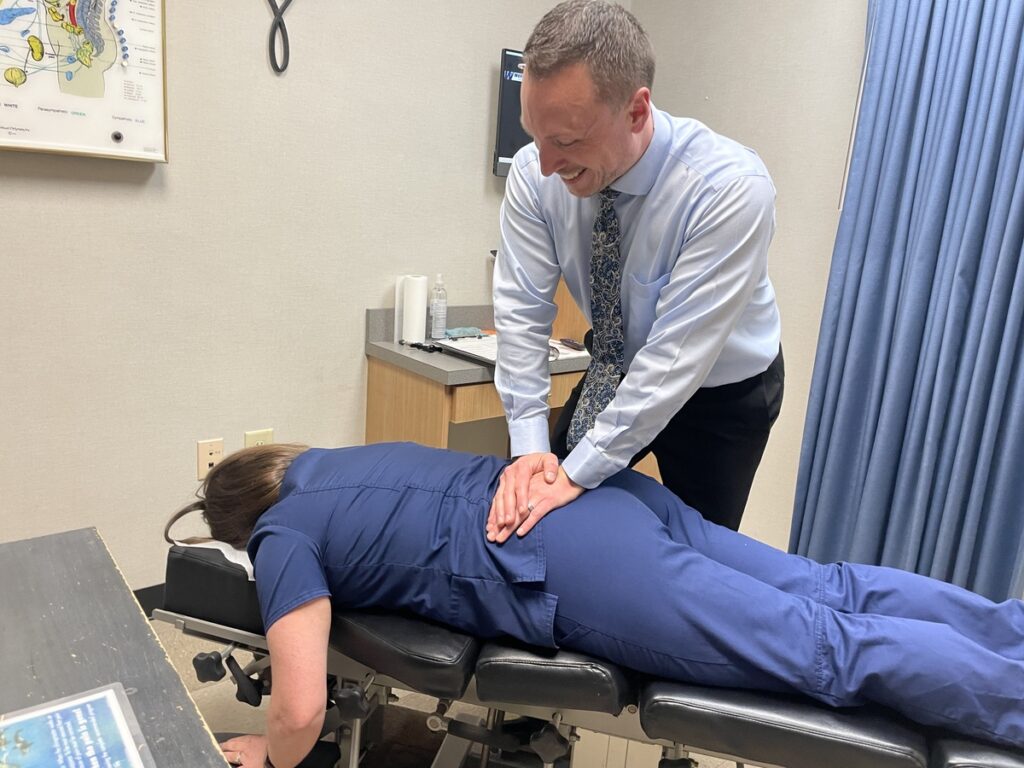
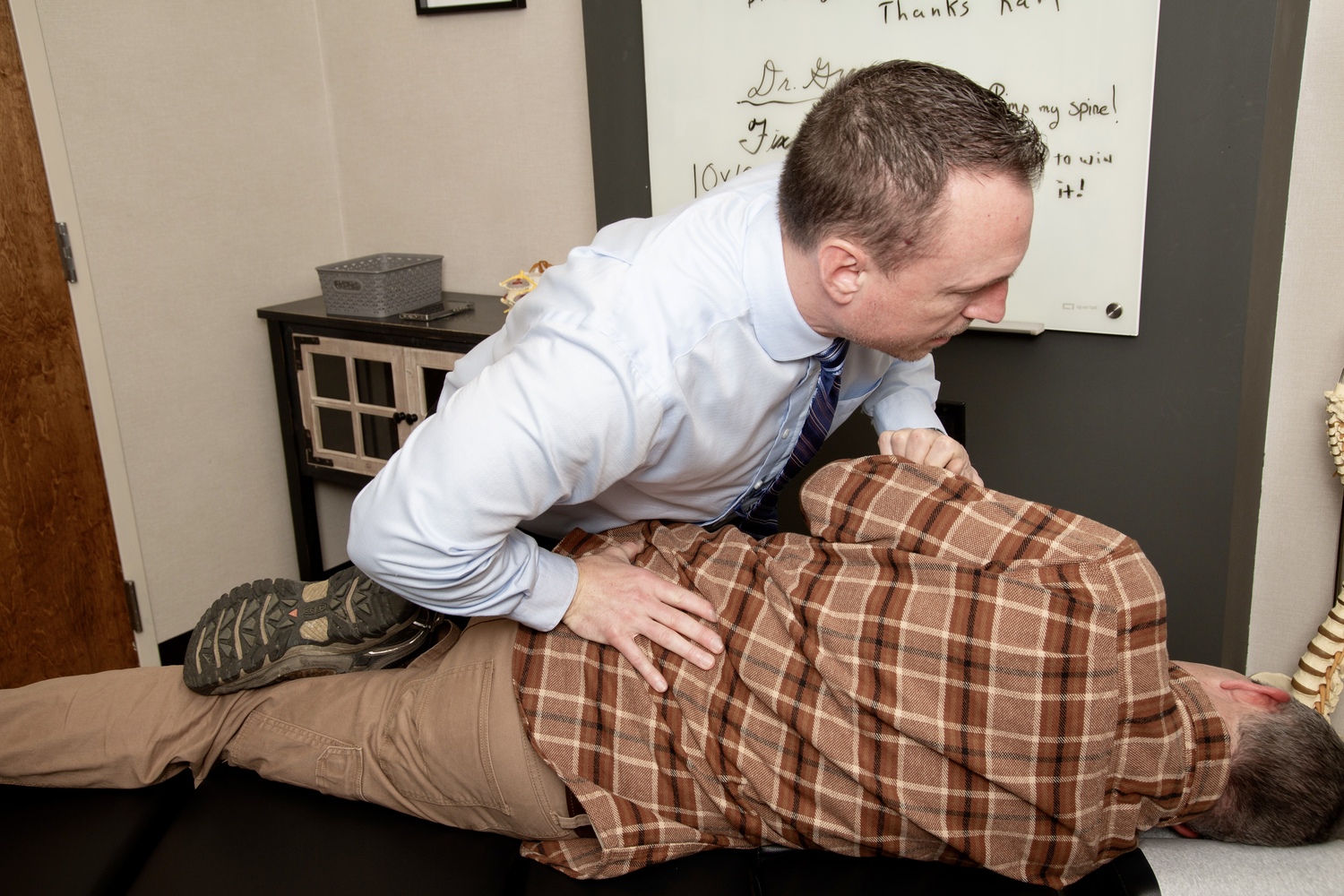
Chiropractic adjustments — also called spinal manipulation — are at the core of care. These are precise, controlled movements applied to specific joints in the spine to restore proper motion and alignment. When a vertebra or disc is contributing to nerve compression, restoring its normal position can directly relieve the pressure on that nerve. Many patients notice improvement in their symptoms after just a few visits, though the timeline varies based on the severity and duration of the condition.
Beyond adjustments, Dr. Charlie Gray may incorporate complementary approaches such as soft tissue therapy, therapeutic exercise recommendations, postural education, and ergonomic guidance. This well-rounded approach helps address not just the immediate compression, but also the contributing factors that allowed it to develop in the first place. The aim is always long-term relief and prevention, not just short-term comfort.
The American College of Physicians and other respected health organizations have recognized spinal manipulation as a reasonable first-line option for spinal pain conditions, reinforcing the value of chiropractic care as part of a conservative management approach.
Combining Chiropractic Care With Non-Surgical Spinal Decompression
For certain patients, particularly when a bulging or herniated disc is contributing to nerve compression, Dr. Charlie Gray may also recommend non-surgical spinal decompression as part of the treatment plan.
Non-surgical spinal decompression uses controlled, gentle traction to reduce pressure on targeted areas of the spine. The goal is to create a more favorable environment around affected discs and nerve roots, which may help reduce irritation and improve mobility.
When appropriate, combining spinal decompression with chiropractic care allows Dr. Gray to address the problem from multiple angles. Chiropractic adjustments can help improve joint movement and spinal function, while decompression is designed to reduce mechanical pressure in areas where discs and nerves may be involved.
Not every pinched nerve requires spinal decompression, which is why a proper evaluation is important. Dr. Gray can determine whether chiropractic care alone or a combination of chiropractic adjustments and non-surgical spinal decompression is appropriate based on your symptoms, examination findings, and the underlying cause of the nerve compression.
Additional recommendations may include therapeutic exercise, postural education, and ergonomic guidance to address factors that could be contributing to the problem. The overall goal is to develop a conservative care plan that helps you move more comfortably while addressing the source of your symptoms.
Practical Tips for Managing Nerve Discomfort
While professional care is important, there are also things you can do at home to support your recovery and reduce the likelihood of worsening your symptoms. These tips are general in nature and are not a substitute for an individualized evaluation — but they reflect the kind of everyday guidance Dr. Charlie Gray shares with patients at Wellness One in Hickory, NC.
Pay close attention to your posture throughout the day. When you sit, try to keep your spine in a neutral position — that means ears over your shoulders, shoulders over your hips, and your feet flat on the floor. Avoid prolonged forward head posture, which puts tremendous strain on the cervical spine and can contribute to nerve compression in the neck.
Take regular movement breaks. Sitting in one position for too long increases pressure on spinal discs and tightens the surrounding musculature. Getting up to walk or gently stretch every 30 to 45 minutes can make a real difference in how your spine feels over the course of a day.
Be mindful of how you sleep. Sleeping on your stomach with your head turned sharply to one side can stress the neck and aggravate nerve-related symptoms. Side-sleeping with a supportive pillow that keeps your head aligned with your spine is often a better choice for people dealing with pinched nerve discomfort.
When to See a Chiropractor
Many people wait too long before seeking help, hoping that their symptoms will simply go away on their own. While some mild cases of nerve compression do resolve with rest and time, others can worsen if the underlying cause isn’t addressed. It’s worth scheduling an evaluation when symptoms have persisted for more than a week or two, when the pain is interfering with your daily life, or when you notice numbness or weakness alongside the pain.
Here in Hickory, NC, patients often come to Wellness One after trying pain medications or simply waiting things out — only to find that the problem hasn’t improved. Chiropractic care is often most effective when started sooner rather than later, before compensation patterns and muscle imbalances have had time to develop.
There are also situations where chiropractic care alone may not be the right first step, and a responsible chiropractor will tell you so. Red flags that warrant immediate medical attention include loss of bowel or bladder control, significant leg weakness that is rapidly worsening, severe numbness in the groin or inner thigh area (which could indicate cauda equina syndrome), or symptoms following a serious trauma. In these cases, it’s important to seek emergency medical care right away.
|
Situation |
Recommended Action |
|---|---|
|
Mild pain lasting less than 1 week |
Rest, gentle movement, monitor symptoms |
|
Pain lasting more than 1–2 weeks |
Schedule a chiropractic evaluation |
|
Numbness, tingling, or radiating pain |
See a chiropractor for assessment and imaging referral if needed |
|
Pain interfering with daily activities |
Seek professional care promptly |
|
Loss of bowel/bladder control or rapid leg weakness |
Seek emergency medical care immediately |
|
Symptoms following major trauma |
Go to the emergency room or urgent care first |
Myths vs. Facts About Pinched Nerves
Myth: A pinched nerve always means surgery is needed.
Fact: The vast majority of pinched nerve cases respond well to conservative, non-invasive care. Chiropractic care, physical therapy, and other non-surgical approaches are typically the recommended starting point. Surgery is generally considered only when conservative methods have been tried without success, or when there are severe neurological deficits.
Myth: If I rest completely, my pinched nerve will heal on its own.
Fact: While rest can help in the very short term, prolonged inactivity can actually worsen outcomes. Movement — the right kind, guided by a professional — helps reduce inflammation, promotes disc health, and prevents the muscles around the affected area from becoming weak or tight. Complete rest is rarely the best long-term strategy.
Myth: Pinched nerves only happen to older people.
Fact: While degenerative changes associated with aging can certainly contribute to nerve compression, pinched nerves can affect people of any age. Poor posture, sedentary lifestyles, sports injuries, and repetitive strain are common culprits that affect younger adults and even teenagers. Dr. Charlie Gray at Wellness One sees patients across a wide age range dealing with nerve-related complaints.
Myth: Chiropractic adjustments are dangerous for nerve problems.
Fact: When performed by a licensed and trained chiropractor, spinal adjustments have a well-established safety profile for the majority of spinal conditions. Dr. Charlie Gray conducts a thorough evaluation before beginning any care to ensure that adjustments are appropriate and safe for your specific situation. Chiropractic care is widely recognized as a conservative and generally low-risk option for musculoskeletal conditions.
Myth: The pain going away means the problem is fixed.
Fact: Pain relief is an important step, but it doesn’t always mean the underlying mechanical issue has been fully resolved. Structural problems in the spine can persist even after symptoms subside. This is why continuing with a care plan and building supportive habits — like better posture and regular movement — is so important for preventing recurrence.
Final Thoughts from Wellness One
Dealing with a pinched nerve can be frustrating, uncomfortable, and at times downright scary. But the truth is, most people who experience nerve compression can find meaningful relief with the right care and guidance. You don’t have to simply push through the pain or assume that your only option is medication or surgery.
At Wellness One in Hickory, NC, Dr. Charlie Gray is committed to helping patients in our community understand what’s going on in their bodies and find safe, effective, non-invasive ways to feel better. Whether you’ve been dealing with symptoms for years or just started noticing something recently, a proper evaluation is always the right starting point.
Hickory is a community full of hardworking, active people — and you deserve to move through your days without nerve pain holding you back. If you’re looking for a chiropractor near you who will take your concerns seriously, listen carefully, and build a care plan around your specific needs, Wellness One is here to help.
Frequently Asked Questions
How long does it take for a pinched nerve to heal with chiropractic care?
Recovery time varies depending on the severity and duration of the compression, as well as the underlying cause. Some patients notice improvement within a few visits, while more chronic cases may take several weeks of consistent care. Dr. Charlie Gray will give you a realistic expectation based on your individual evaluation.
Can chiropractic care make a pinched nerve worse?
When a thorough evaluation is done beforehand, chiropractic adjustments are generally safe and well-tolerated. Dr. Charlie Gray at Wellness One conducts careful assessments before beginning treatment to ensure the approach is appropriate for your condition. If imaging or additional evaluation is needed, that will be recommended before care begins.
What’s the difference between a pinched nerve and sciatica?
Sciatica is a specific type of pinched nerve involving the sciatic nerve, which runs from the lower back through the buttock and down the leg. A pinched nerve is a broader term that can refer to compression anywhere in the body. Sciatica is one of the most common presentations of nerve compression that chiropractors treat.
Do I need an MRI before seeing a chiropractor for a pinched nerve?
Not necessarily. Many chiropractors, including Dr. Charlie Gray, can begin an assessment based on clinical examination findings. If imaging is needed to clarify the diagnosis or rule out serious underlying causes, a referral for an MRI or X-ray may be recommended as part of the process.
Can poor posture really cause a pinched nerve?
Yes, sustained poor posture can contribute to spinal misalignment and increased pressure on nerve roots over time. This is especially common in the cervical spine due to “tech neck” — the forward head posture many people develop from looking at screens for long periods. Addressing posture is an important part of prevention and recovery.
Is chiropractic care safe for disc-related pinched nerves?
Evidence suggests that chiropractic care, including spinal manipulation, can be beneficial for disc-related nerve compression in many patients. The appropriateness of specific techniques depends on the individual case, which is why a thorough evaluation is always conducted first. Dr. Charlie Gray will discuss the best approach based on your specific findings.
TL;DR
-
A pinched nerve occurs when surrounding tissues — like a herniated disc, bone spur, or tight muscles — press on a nerve, causing pain, numbness, or tingling.
-
Symptoms can appear far from the source of compression, such as pain traveling down the arm or leg.
-
Chiropractic care addresses the root cause by restoring spinal alignment and reducing nerve pressure through non-invasive methods.
-
Most cases respond well to conservative care, and surgery is rarely the first option.
-
If you’re in the Hickory, NC area and experiencing nerve-related symptoms, Wellness One and Dr. Charlie Gray are here to help you get evaluated and on the right path.